Εμφάνιση αναρτήσεων με ετικέτα Βιβλία. Εμφάνιση όλων των αναρτήσεων

21 Νοεμβρίου 2017

New book: Brill’s Companion to the Reception of Plato in Antiquity


Image result for Brill’s Companion to the Reception of Plato in Antiquity
Brill’s Companion to the Reception of Plato in Antiquity. Edited by Harold Tarrant, University of Newcastle Australia, Danielle A. Layne, Gonzaga University, Dirk Baltzly, University of Tasmania and Monash University, and François Renaud, Université de Moncton. Brill's Companions to Classical Reception 13. Leiden: Brill, 2018.
Courtesy of the website at Brill: "Brill’s Companion to the Reception of Plato in Antiquityoffers a comprehensive account of the ways in which ancient readers responded to Plato, as philosopher, as author, and more generally as a central figure in the intellectual heritage of Classical Greece, from his death in the fourth century BCE until the Platonist and Aristotelian commentators in the sixth century CE. The volume is divided into three sections: ‘Early Developments in Reception’ (four chapters); ‘Early Imperial Reception’ (nine chapters); and ‘Early Christianity and Late Antique Platonism’ (eighteen chapters). Sectional introductions cover matters of importance that could not easily be covered in dedicated chapters. The book demonstrates the great variety of approaches to and interpretations of Plato among even his most dedicated ancient readers, offering some salutary lessons for his modern readers too."

Table of contents


Acknowledgements
Abbreviations
Notes on Contributors
Introduction
Part I. Early Developments in Reception
Introduction: The Old Academy to Cicero
1 Speusippus and Xenocrates on the Pursuit and Ends of Philosophy
Phillip Sidney Horky
2 The Influence of the Platonic Dialogues on Stoic Ethics from Zeno to Panaetius of Rhodes
Francesca Alesse
3 Plato and the Freedom of the New Academy
Charles E. Snyder
4 Return to Plato and Transition to Middle Platonism in Cicero
François Renaud
Part II. Early Imperial Reception of Plato
Introduction: Early Imperial Reception of Plato
5 From Fringe Reading to Core Curriculum: Commentary, Introduction and Doctrinal Summary
Harold Tarrant
6 Philo of Alexandria
Sami Yli-Karjanmaa
7 Plutarch of Chaeronea and the Anonymous Commentator on the Theaetetus
Mauro Bonazzi
8 Theon of Smyrna: Re-thinking Platonic Mathematics in Middle Platonism
Federico M. Petrucci
9 Cupid's Swan from the Academy (De Plat. 1.1, 183): Apuleius' Reception of Plato
Geert Roskam
10 Alcinous' Reception of Plato
Carl S. O'Brien
11 Numenius: Portrait of a Platonicus
Polymnia Athanassiadi
12 Galen and Middle Platonism: The Case of the Demiurge
Julius Rocca
13 Variations of Receptions of Plato during the Second Sophistic
Ryan C. Fowler
Part III. Early Christianity and Late Antique Platonism
Introduction: Early Christianity and Late Antique Platonism
14 Origen to Evagrius
Ilaria Ramelli
15 Sethian Gnostic Appropriations of Plato
John D. Turner
16 Plotinus and Platonism
Lloyd P. Gerson
17 Porphyry
Michael Chase
18 The Anonymous Commentary on the Parmenides
Dennis Clark
19 Iamblichus, the Commentary Tradition, and the Soul
John Finamore
20 Amelius and Theodore of Asine
Dirk Baltzly
21 Plato's Political Dialogues in the Writings of Julian the Emperor
Dominic J. O'Meara
22 Plato's Women Readers
Crystal Addey
23 Calcidius
Christina Hoenig
24 Augustine's Plato
Gerd Van Riel
25 Orthodoxy and Allegory: Syrianus' Metaphysical Hermeneutics
Sarah Klitenic Wear
26 Hermias: On Plato's Phaedrus
Harold Tarrant and Dirk Baltzly
27 Proclus and the Authority of Plato
Jan Opsomer
28 Damascius the Platonic Successor: Socratic Activity and Philosophy in the 6th Century CE
Sara Ahbel-Rappe
29 The Anonymous Prolegomena to Platonic Philosophy
Danielle A. Layne
30 Olympiodorus of Alexandria
Michael Griffin
31 Simplicius of Cilicia: Plato's Last Interpreter
Gary Gabor
Conclusion
Bibliography
General Index
Index Locorum

15 Μαΐου 2017

Defining Platonism


A new volume of studies of the ISNS on Neoplatonism: Defining Platonism: Essays in Honor of the 75th Birthday of John M. Dillon, edited by Sarah Klitenic Wear and John F. Finamore (Franciscan University Press). Below is the table of contents:

Apologia pro Vita Sua Operibusque, by John Dillon viii

Introduction 1

John F. Finamore and Sarah Klitenic Wear

Part I. Plato

1. Platonic Eschatology 11

John Bussanich

2. The Platonist as Friend 29

Kevin Corrigan

3. Plato’s Timaeus: What Is in the Paradigm? 44

Allan Silverman

4. The Athenians against the Persians: Plato’s View

(Laws III, 698a–700a) 64

Christopher Rowe

Part II. Ancient Platonism

5. Numenius, Neopythagoreanism, and the

Troublesome “King(s)” 85

Harold Tarrant

6. Can One Speak of Mysticism in Plotinus? 96

Luc Brisson

7. The Relentless Pursuit of Justice 117

Gary M. Gurtler, SJ

8. Plotinus on Evil: Proclus and the Author of The Divine Names 130

Denis O’Brien

9. Plotinus on Suicide 162

Suzanne Stern-Gillet

10. Self-Reflexive Ontogenesis in the Tripartite Tractate

and Plotinus 181

John D. Turner

11. The Metaphysics of Power, Logos, and Harmony in Porphyry 198

Stephen Gersh

12. The Soul as a Writing Tablet, from Plato to Proclus 218

Anne Sheppard

13. Hermias and the Soul’s Pilot 228

John F. Finamore

14. Plotinus and the Apophatic Augustine 238

John Peter Kenney

15. The Figure of the Diadochos, from Socrates to the Late Antique

Athenian School of Neoplatonism 253

Carl Séan O’Brien and Sarah Klitenic Wear

Part III. Modern Platonism

16. The Platonist as Music Lover: Some Reflections

and Auditions 273

Jay Bregman

17. Platonism versus Naturalism 291

Lloyd P. Gerson

16 Μαρτίου 2017

New books in Neoplatonism, spring 2017


Proclus: Commentary on Plato's Timaeus


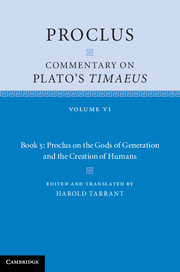
Several juicy titles in Neoplatonic Studies are popping up for 2017 already. One is a promising-looking set of studies on Byzantine Perspectives on Neoplatonism, which includes a number of papers on Proclus, Plethon, and the reception of Neoplatonic texts in the Byzantine world. The other is the latest installment in Cambridge UP's series of new translations of Proclus' Commentary on Plato's 'Timaeus'"Volume 6. Book 5: Proclus on the Gods of Generation and the Creation of Humans." These translations - and esp. their introductions and notes - have become indispensible resources for scholars working on Neoplatonism.

19 Μαΐου 2016

New translation of Calcidius

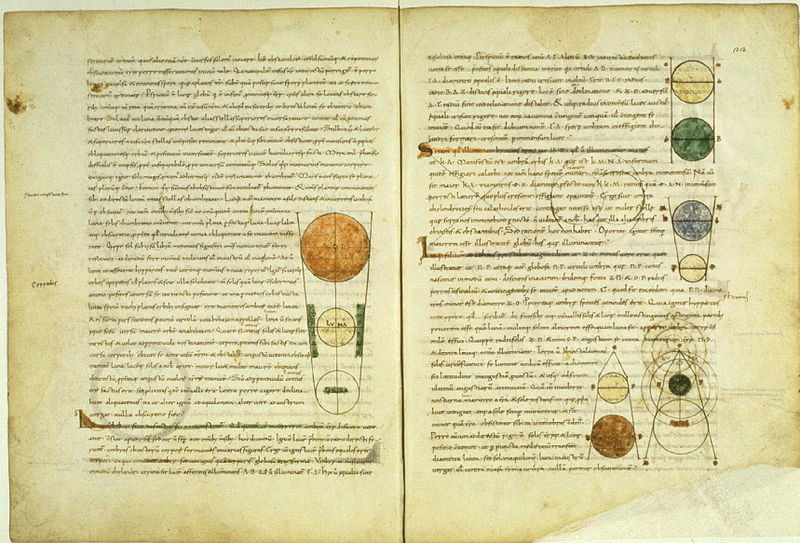
File:Timaeus trans calcidius med manuscript.jpg
Medieval manuscript of Calcidius' Latin
translation of Plato's Timaeus.

John Magee's new translation of the fourth-century Latin commentary of Calcidius on Plato's Timaeus has now appeared, courtesy of Harvard University Press. Check it out here. This should be a very useful resource for anybody tangling with ancient philosophy.
More details from HUP: "Until the Renaissance, the work of Calcidius offered the medieval West almost the only direct access to Plato’s corpus not dispersed in fragments. In the 4th century CE, Calcidius translated into Latin an important section of Plato’sTimaeus, complemented by extensive commentary and organized into coordinated parts. The first part is broadly devoted to the architecture of the world, to its intelligible structure. The second delves into the nature of the living creatures that inhabit it. This basic division subsequently informed the sense of macrocosm and microcosm—of the world and our place in it—which is prevalent in western European thought in the Middle Ages. At the same time, this medieval volume altered perspectives on Plato by drawing on other philosophical traditions, particularly the Stoic and Peripatetic, while including Judeo-Christian cosmology and anthropology. The present edition provides the first English translation of Calcidius’s work."

7 Μαρτίου 2016

New edition of the Refutation of All Heresies


One of the most important ancient Christian sources regarding not only Gnosticism, but Elchasai and the Elchasaites, Orphism, Pythagoreanism, and much, much more is the anonymous Refutation of All Heresies. Scholars familiar with the work know the commonly used Greek text (of Marcovich) to be deficient due to the editor's zeal for emendation; meanwhile, the English translation in the Anti-Nicene Fathers series (accessible onlinehere) is not only completely unreliable, but uses a different numbering scheme than we find in Marcovich. A totally revised critical edition of the Greek and English alike has been a desideratum for a long time, and M. David Litwa (U. Virginia) has delivered the goods in this wonderful new edition published by the Society of Biblical Literature. More information is available here.

24 Οκτωβρίου 2015

Free Book – Gemistos Plethon, The Byzantine and Latin Renaissance

Jozef Matula and Paul Richard Blum have published the proceedings of the conference “Georgios Gemistos Plethon: The Byzantine and the Latin Renaissance" (Center for Renaissance Texts at the Palacký University, Olomouc, Czech Republic, 10-12 May 2013). The volume is available online, here.
(Via AncientEsotericism.org :: Network for the Study of Esotericism in Antiquity)

22 Σεπτεμβρίου 2015

28 Δεκεμβρίου 2013

The Enneads: Abridged Edition (Penguin Classics)


The essence of mystic thought of all times. Grandeur of Logos and Ecstasy. This is an abridged edition, for a first contact with Plotinus' masterpiece. His thought of course is not easily accessible. One should not have the illusion that reading only one time a translation of the Enneads, in English, will understand the complicated and at the same time simple in its architecture plotinian system of thought. If someone tries to be absorbed in the text, probably he will be disappointed. If again he tries to read indirectly, and believes he understands the skeleton of Plotinus' thought, probably he will leave somehow or other with empty hands. Only with the combination of both, maybe, at the end, one can comprehend something of his thought.