Εμφάνιση αναρτήσεων με ετικέτα Ύστερη Αρχαιότητα. Εμφάνιση όλων των αναρτήσεων

4 Μαρτίου 2018

New book: Timotin, La prière dans la tradition platonicienne, de Platon à Proclus


Andrei Timotin's latest has just been published - a comprehensive treatment of prayer in the Platonic Tradition. His book on demonology in Platonism is the definitive treatment on the subject, and really a must-read for anyone interested in demons and divine intermediaries in late ancient Mediterranean literature, so this one promises to be worthwhile as well.
From the Brepols website:
Andrei Timotin, La prière dans la tradition platonicienne, de Platon à Proclus
Languages: French

Le présent ouvrage étudie la prière comme catégorie de la pensée religieuse platonicienne, de Platon à la fin de l’Antiquité.

The present book studies prayer as a category of Platonic religious thought, from Plato to Late Antiquity. Following a chronological framework (Plato, the pseudo-Platonic Second Alcibiades, Maximus of Tyre, Plotinus, Porphyry, Iamblichus, Proclus), the book examines the relationship between philosophical reflection on prayer and a series of themes and related topics: the criticism and the interpretation of traditional cults, the conceptualization of religious emotions, the philosophical explanation of how astrology and magic work, the theories of the soul, and the theological description of reality in Late Neoplatonism.
The book aims to contribute to shed new light on the relationship between religion and philosophy in Antiquity and, in particular, on the forms of “scientific” religion that appear and develop in the philosophical schools in Late Antiquity. Special attention is paid to the relationship between philosophy, religion, and rhetoric. The rhetorical dimension of prayer is explored in relation to the role of persuasion and emotion in prayer and to the idea that exegetical commentary represents a hymn in prose addressed to the gods.
Le présent ouvrage a pour objet la prière comme catégorie de la pensée religieuse platonicienne, de Platon à la fin de l’Antiquité. En suivant un plan chronologique (Platon, le Second Alcibiade pseudo-platonicien, Maxime de Tyr, Plotin, Porphyre, Jamblique, Proclus), il étudie la relation entre la réflexion philosophique sur la prière et une série de thèmes et de questions connexes : la critique et l’interprétation des cultes traditionnels, la conceptualisation des émotions religieuses, l’explication philosophique du fonctionnement de l’astrologie et de la magie, les théories de l’âme et la description théologique du réel dans le néoplatonisme tardif.
Cette recherche souhaite contribuer à jeter un éclairage nouveau sur les rapports entre religion et philosophie dans l’Antiquité et, en particulier, sur les formes « scientifiques » de religion qui apparaissent et se développent dans les écoles philosophiques à la fin de l’Antiquité. Une attention particulière est prêtée à la relation entre philosophie, religion et rhétorique. La dimension rhétorique de la prière est explorée en relation avec le rôle de la persuasion et de l’affectivité dans la prière et avec la conception selon laquelle le commentaire exégétique représente un hymne en prose adressé aux dieux.
Andrei Timotin est chercheur à l’Académie roumaine et maître de conférences associé à l’Université de Bucarest. Il a publié, sur les rapports entre philosophie et religion dans la pensée grecque, "La démonologie platonicienne. Histoire de la notion de daimôn de Platon aux derniers néoplatoniciens" (Brill, 2012) et, en collaboration avec John Dillon, "Platonic Theories of Prayer" (Brill, 2016).
Table of Contents
I. Introduction
II. Platon. Prières des impies, prières des sages
1. Prier selon la loi
2.  Les prières platoniciennes et la tradition religieuse

III. Le Second Alcibiade. À la recherche de la prière idéale
1. Le Second Alcibiade et la pensée religieuse à l’époque hellénistique
2. La prière de l’ἄφρων : demander un mal au lieu d’un bien
3. La prière pour les ἐσθλά du poète anonyme
4. La prière des Athéniens et la prière des Spartiates

IV. Maxime de Tyr. Prière traditionnelle et prière du philosophe
1. La critique de la prière traditionnelle
2. La définition d’une « prière du philosophe »

V. Plotin. Prière « magique » et prière du νοῦς
1. Prière, providence et responsabilité individuelle
2. Les prières peuvent-elles contraindre les astres ?
3. Prier et attendre Dieu

VI. Porphyre. Hiérarchie des êtres divins, hiérarchie des prières
1. La défense de la prière dans le Commentaire sur le Timée
2. La Lettre à Anébon : prier n’est ni contraindre, ni pâtir
3. La place de la prière dans la théorie du sacrifice
4. Prière du sage, prière des théurges

VII. Jamblique. La prière théurgique
1. Les réponses de Jamblique aux objections de Porphyre
2. La théorie de la prière de Jamblique
3. La prière finale de la Réponse à Porphyre (De mysteriis)

VIII. Proclus. La prière cosmique
1. L’οὐσία de la prière
2. La τελειότης de la prière
3. Les causes et les modes de la prière
4. La pratique de la prière

IX. Conclusions
Bibliographie
1. Sources
2. Littérature secondaire
Index locorum
Index rerum
Index verborum

21 Νοεμβρίου 2017

New book: Brill’s Companion to the Reception of Plato in Antiquity


Image result for Brill’s Companion to the Reception of Plato in Antiquity
Brill’s Companion to the Reception of Plato in Antiquity. Edited by Harold Tarrant, University of Newcastle Australia, Danielle A. Layne, Gonzaga University, Dirk Baltzly, University of Tasmania and Monash University, and François Renaud, Université de Moncton. Brill's Companions to Classical Reception 13. Leiden: Brill, 2018.
Courtesy of the website at Brill: "Brill’s Companion to the Reception of Plato in Antiquityoffers a comprehensive account of the ways in which ancient readers responded to Plato, as philosopher, as author, and more generally as a central figure in the intellectual heritage of Classical Greece, from his death in the fourth century BCE until the Platonist and Aristotelian commentators in the sixth century CE. The volume is divided into three sections: ‘Early Developments in Reception’ (four chapters); ‘Early Imperial Reception’ (nine chapters); and ‘Early Christianity and Late Antique Platonism’ (eighteen chapters). Sectional introductions cover matters of importance that could not easily be covered in dedicated chapters. The book demonstrates the great variety of approaches to and interpretations of Plato among even his most dedicated ancient readers, offering some salutary lessons for his modern readers too."

Table of contents


Acknowledgements
Abbreviations
Notes on Contributors
Introduction
Part I. Early Developments in Reception
Introduction: The Old Academy to Cicero
1 Speusippus and Xenocrates on the Pursuit and Ends of Philosophy
Phillip Sidney Horky
2 The Influence of the Platonic Dialogues on Stoic Ethics from Zeno to Panaetius of Rhodes
Francesca Alesse
3 Plato and the Freedom of the New Academy
Charles E. Snyder
4 Return to Plato and Transition to Middle Platonism in Cicero
François Renaud
Part II. Early Imperial Reception of Plato
Introduction: Early Imperial Reception of Plato
5 From Fringe Reading to Core Curriculum: Commentary, Introduction and Doctrinal Summary
Harold Tarrant
6 Philo of Alexandria
Sami Yli-Karjanmaa
7 Plutarch of Chaeronea and the Anonymous Commentator on the Theaetetus
Mauro Bonazzi
8 Theon of Smyrna: Re-thinking Platonic Mathematics in Middle Platonism
Federico M. Petrucci
9 Cupid's Swan from the Academy (De Plat. 1.1, 183): Apuleius' Reception of Plato
Geert Roskam
10 Alcinous' Reception of Plato
Carl S. O'Brien
11 Numenius: Portrait of a Platonicus
Polymnia Athanassiadi
12 Galen and Middle Platonism: The Case of the Demiurge
Julius Rocca
13 Variations of Receptions of Plato during the Second Sophistic
Ryan C. Fowler
Part III. Early Christianity and Late Antique Platonism
Introduction: Early Christianity and Late Antique Platonism
14 Origen to Evagrius
Ilaria Ramelli
15 Sethian Gnostic Appropriations of Plato
John D. Turner
16 Plotinus and Platonism
Lloyd P. Gerson
17 Porphyry
Michael Chase
18 The Anonymous Commentary on the Parmenides
Dennis Clark
19 Iamblichus, the Commentary Tradition, and the Soul
John Finamore
20 Amelius and Theodore of Asine
Dirk Baltzly
21 Plato's Political Dialogues in the Writings of Julian the Emperor
Dominic J. O'Meara
22 Plato's Women Readers
Crystal Addey
23 Calcidius
Christina Hoenig
24 Augustine's Plato
Gerd Van Riel
25 Orthodoxy and Allegory: Syrianus' Metaphysical Hermeneutics
Sarah Klitenic Wear
26 Hermias: On Plato's Phaedrus
Harold Tarrant and Dirk Baltzly
27 Proclus and the Authority of Plato
Jan Opsomer
28 Damascius the Platonic Successor: Socratic Activity and Philosophy in the 6th Century CE
Sara Ahbel-Rappe
29 The Anonymous Prolegomena to Platonic Philosophy
Danielle A. Layne
30 Olympiodorus of Alexandria
Michael Griffin
31 Simplicius of Cilicia: Plato's Last Interpreter
Gary Gabor
Conclusion
Bibliography
General Index
Index Locorum

19 Μαΐου 2016

New translation of Calcidius

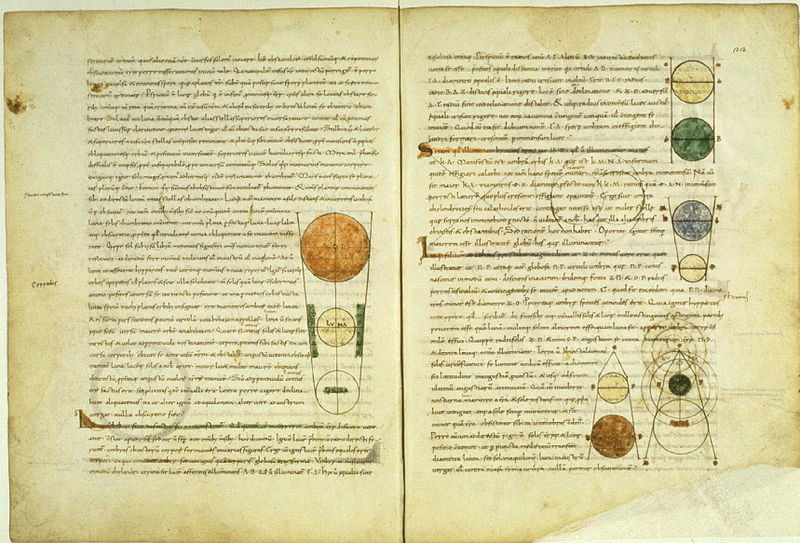
File:Timaeus trans calcidius med manuscript.jpg
Medieval manuscript of Calcidius' Latin
translation of Plato's Timaeus.

John Magee's new translation of the fourth-century Latin commentary of Calcidius on Plato's Timaeus has now appeared, courtesy of Harvard University Press. Check it out here. This should be a very useful resource for anybody tangling with ancient philosophy.
More details from HUP: "Until the Renaissance, the work of Calcidius offered the medieval West almost the only direct access to Plato’s corpus not dispersed in fragments. In the 4th century CE, Calcidius translated into Latin an important section of Plato’sTimaeus, complemented by extensive commentary and organized into coordinated parts. The first part is broadly devoted to the architecture of the world, to its intelligible structure. The second delves into the nature of the living creatures that inhabit it. This basic division subsequently informed the sense of macrocosm and microcosm—of the world and our place in it—which is prevalent in western European thought in the Middle Ages. At the same time, this medieval volume altered perspectives on Plato by drawing on other philosophical traditions, particularly the Stoic and Peripatetic, while including Judeo-Christian cosmology and anthropology. The present edition provides the first English translation of Calcidius’s work."

5 Απριλίου 2016

New Journal: Studies in Late Antiquity

Studies in Late Antiquity: A JournalΕμφάνιση Εμφάνιση
eISSN: 2470-2048
Elizabeth DePalma Digeser, Editor
Εμφάνιση
Studies in Late Antiquity: A Journal (SLA) is a new online quarterly journal published by the University of California Press. The journal is scheduled to launch in February, 2017.
SLA aims to publish scholarship on a wide range of topics pertaining to the world of Late Antiquity (150 – 750 CE). A defining focus of the journal is fostering multi- and interdisciplinary research that emphasizes the interconnectedness of the Mediterranean with other parts of the late ancient world. Comparative and methodologically innovative papers are especially welcome.
SLA encourages submissions from scholars working in the following regions and languages therein during the period 150-750 CE:
Africa, Anatolia, Arabia, the Baltic, the British Isles, Central and Western Asia, China, Europe, India, the Mediterranean, Persia, Scandinavia
SLA welcomes contributions that explore the following fields and topics:
Archaeology, Cultural Geography (including Cartography), Economics, History (including Cultural History), History of the Arts (including Architecture, Art, and Music), Law, Literature and Rhetoric, Material Culture (including Codicology, Epigraphy, Numismatics, and Papyrology), Historical Demography, Philology, Philosophy, Religion, Theology
Please direct any editorial inquiries including submission inquiries to Elizabeth DePalma Digeser via e-mail at edepalma@history.ucsb.edu

1 Απριλίου 2016

Platonism and Neoplatonism in Numen


image of Numen
The new issue of Numen (volume 63, issues 2-3) features a number of articles on later Platonism and religion in late antiquity. Looking forward to digging into them. The TOC is below, or see the issue online here.

The new issue of Numen (volume 63, issues 2-3) features a number of articles on later Platonism and religion in late antiquity. Looking forward to digging into them. The TOC is below, or see the issue online here.

7 Μαρτίου 2016

New edition of the Refutation of All Heresies


One of the most important ancient Christian sources regarding not only Gnosticism, but Elchasai and the Elchasaites, Orphism, Pythagoreanism, and much, much more is the anonymous Refutation of All Heresies. Scholars familiar with the work know the commonly used Greek text (of Marcovich) to be deficient due to the editor's zeal for emendation; meanwhile, the English translation in the Anti-Nicene Fathers series (accessible onlinehere) is not only completely unreliable, but uses a different numbering scheme than we find in Marcovich. A totally revised critical edition of the Greek and English alike has been a desideratum for a long time, and M. David Litwa (U. Virginia) has delivered the goods in this wonderful new edition published by the Society of Biblical Literature. More information is available here.

22 Ιανουαρίου 2016

Stroumsa reviews Athanassiadi, Mutations of Hellenism at BMCR

Bryn Mawr Classical Review has just published Guy Stroumsa's review of Polymnia Athanassiadi's recent collection of studia minora, Mutations of Hellenism in Late Antiquity. You can read the review here. From the publisher's website:

  • The 21 studies in this volume, which deal with issues of social and intellectual history, religion and historical methodology, explore the ways whereby over the course of a few hundred years -roughly between the second and the fifth centuries A.D.- an anthropocentric culture mutated into a theocentric one. Rather than underlining the differences between a revamped paganism and the emergent Christian traditions, the essays in the volume focus on the processes of osmosis, interaction and acculturation, which shaped the change in priorities among the newly created textual communities that were spreading across the entire breadth of the late antique oecumene. The main issues considered in this connection include the phenomena of textuality and holy scripture, canonicity and exclusion, truth and error, prophecy and tradition, authority and challenge, faith and salvation, holy places and holy men, in the context of the construction of new orthodox readings of the Greek philosophical heritage.Moreover the volume suggests that intolerant attitudes, which form a characteristic trait of monotheisms, were not an exclusive preserve of Christianity (as the Enlightenment tradition would insist), but were progressively espoused by pagan philosophers and divine men as part of the theory and practice of Hellenism’s theological koine. Efforts to establish the monopoly of a revealed truth against any rival claims were transversal to the textual communities which emerged in late antiquity and remodelled the intellectual and spiritual landscape of the Greater Mediterranean.
  • Contents: Introduction. Methodological Concerns: Antiquité tardive: construction et déconstruction d’un modèle historiographique; The oecumenism of Iamblichus: latent knowledge and its awakening. A Religious Koine: Hellenism: a theological koine; The gods are God: polytheistic cult and monotheistic theology in the world of late antiquity; Apamea and the Chaldaean Oracles: a holy city and a holy book; Canonizing Platonism: the fetters of Iamblichus; The creation of orthodoxy in Neoplatonism; A contribution to Mithraic theology: the Emperor Julian’s Hymn to King Helios; Le traitement du mythe: de l’empereur Julien à Proclus. Prophecy and Revelation: Philosophers and oracles: shifts of authority in late paganism; The fate of oracles in late antiquity: Didyma and Delphi; Dreams, theurgy and freelance divination: the testimony of Iamblichus; The Chaldaean Oracles: theology and theurgy; Byzantine commentators on the Chaldaean Oracles: Psellos and Pletho. ΘΕIΟΣ ANHΡ: Ascent to heroic or divine status in late antiquity: continuities and transformations; The divine man of late Hellenism: a sociable and popular figure; Julian the Theurgist: man or myth?. Dissidence and Persecution: Persecution and response in late paganism: the evidence of Damascius; Who was Count Zosimus?’; Christians and others: the conversion ethos in late antiquity. Envoi: From polis to Theoupolis: school syllabuses and teaching methods in late antiquity. Index.
  • About the Author: Polymnia Athanassiadi is Professor of Ancient History at the University of Athens, Greece. 

22 Σεπτεμβρίου 2015

11 Νοεμβρίου 2014

Book review: Porphyrian Problem(s) with Identity in Late Antiquity

Over at Marginalia, Todd Berzon has published a very interesting review of Aaron Johnson's recent monograph, Porphyry and the Limits of Hellenism, which promises to stir up plenty of conversation amongst students of Neoplatonism, early Christianity, and religion in Late Antiquity more generally. The second half of the review is particularly striking, for Berzon here asks if the singular focus on identity in study of Late Antiquity has jumped the shark. Read it here.